Recognise a changing coast
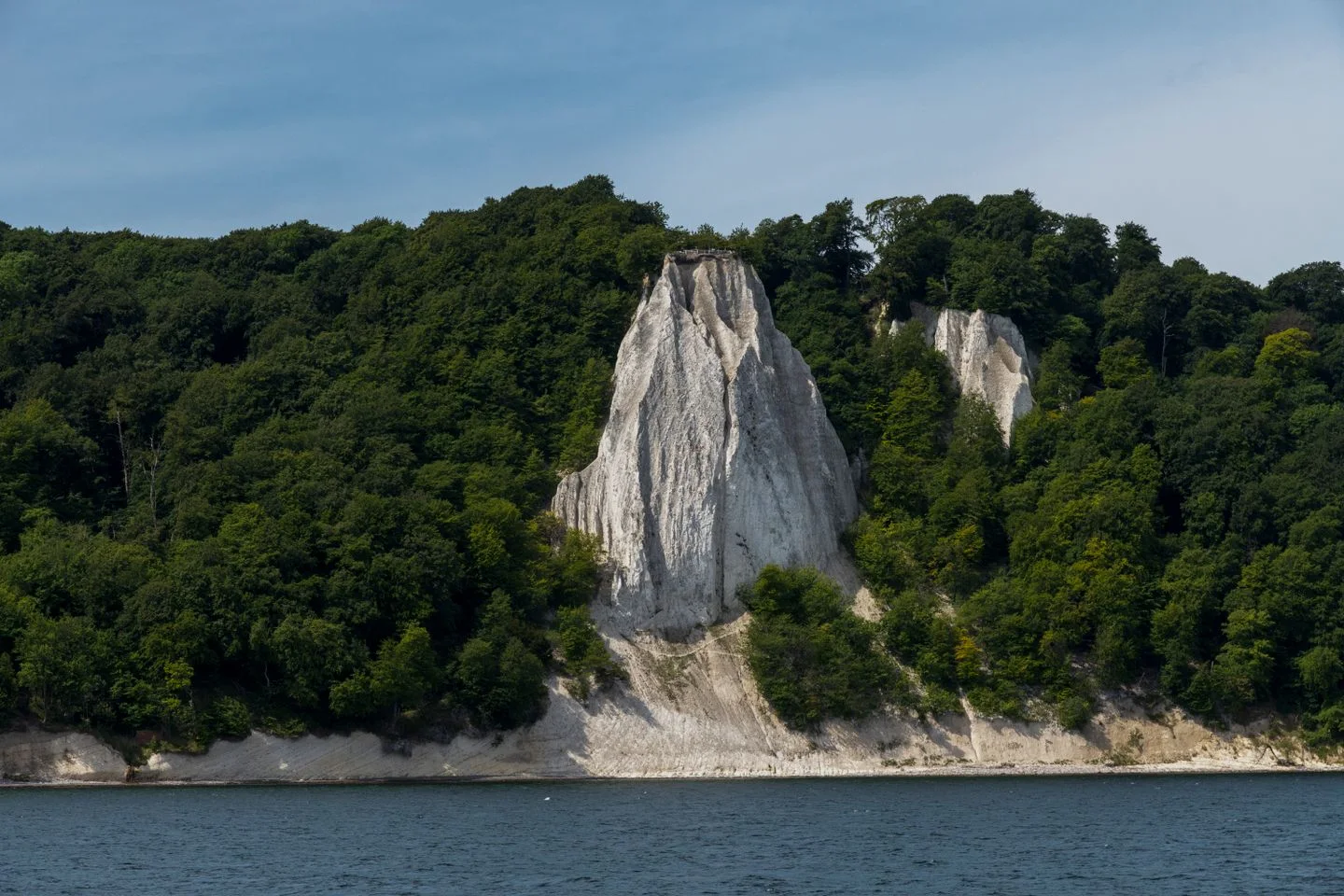
Photographs can make Jasmund's white cliffs appear solid and permanent. In reality, collapses reshape the coastline. The national-park authority repeatedly reports events in different locations. This movement is a basis for choosing paths, not a minor footnote.
Do not plan an unrestricted beach walk immediately beneath the cliffs. The authority advises against such walks and directs visitors towards marked upper paths with distance from potential collapse areas. Current diversions, closures, and instructions also apply above.
A seaward photograph does not establish a position reachable on foot. An older mapped track does not show whether the coastal edge has subsequently moved. Follow current official routing and remain away from unprotected edges.
Use Königsstuhl as a defined destination
Nationalpark-Zentrum Königsstuhl combines interpretation with a designated viewing facility. For a clearly organised visit, inspect its current access, admission, and arrival guidance. A nature region does not consist entirely of interchangeable unrestricted paths.
The centre explains that direct car access is generally restricted and identifies approaches through Hagen or Sassnitz. Check the connection valid on your day, all the way to the centre and back. A parking-area name does not establish that arrival is complete.
Include the walking element of any alternative. A connection through beech woodland may be interesting in its own right but still requires time and assessment of actual conditions. The longest route is not automatically the best merely because it appears more natural.
Check which parts each person most wants. One may value the exhibition while the other anticipates time outside. Allocating time explicitly can keep both elements worthwhile instead of making one a rushed passage to the other.
Notice woodland as well as the cliffs
The beech forest forms an essential part of the landscape rather than merely an approach. Compare the enclosed canopy with an open sea view. This gives the visit more substance than dependence on one unobstructed glimpse of a particular cliff.
Observe from permitted areas. A narrow view between trees is not a reason to move closer to the edge. Adjust cameras or binoculars without requiring a risky change of position.
Use designated places for a shared break, keeping paths and viewing areas clear. Remove rubbish and verify any essential café's availability. Protected land is not an unrestricted picnic surface wherever a scene looks appealing.
Recheck the plan shortly before travelling
Consult both the national park and the particular centre before departure. An existing ticket does not replace checking current information. Weather and altered paths may affect the day even when an exhibition remains available.
Agree an alternative emphasis for restricted visibility or shorter outdoor time. The indoor interpretation may become more important, or the outing may finish earlier. Understanding this coast does not require every possible perspective.
The distinction from an ordinary promenade is that the ground itself changes. A good visit responds to the place rather than expecting the place to conform to an unchanging photograph.
Sources & current information
Opening hours, connections and conditions can change. Consult official sources before travelling and follow local notices.