What do you want to see from the permitted position?
Day-trip binoculars can serve different tasks: examining something across a lake, looking into a tree canopy, or watching birds from a visitor area. Describe those ordinary situations first. Someone mainly viewing landscape details need not prioritise exactly the same qualities as someone searching for small moving subjects.
Consider how long you will actually look through them. For brief observations along the way, access and handling matter particularly. A large model buried under several layers in a backpack may be used less often than a readily accessible alternative. This is not an argument for choosing the smallest device regardless of everything else; it is a reason to match the compromise to the activity.
Observe from permitted paths and designated areas. Binoculars should extend your view without encouraging a closer approach to wildlife. An interesting subject changes neither visitor rules nor whether a place is suitable for stopping.
Understand the numbers on the body
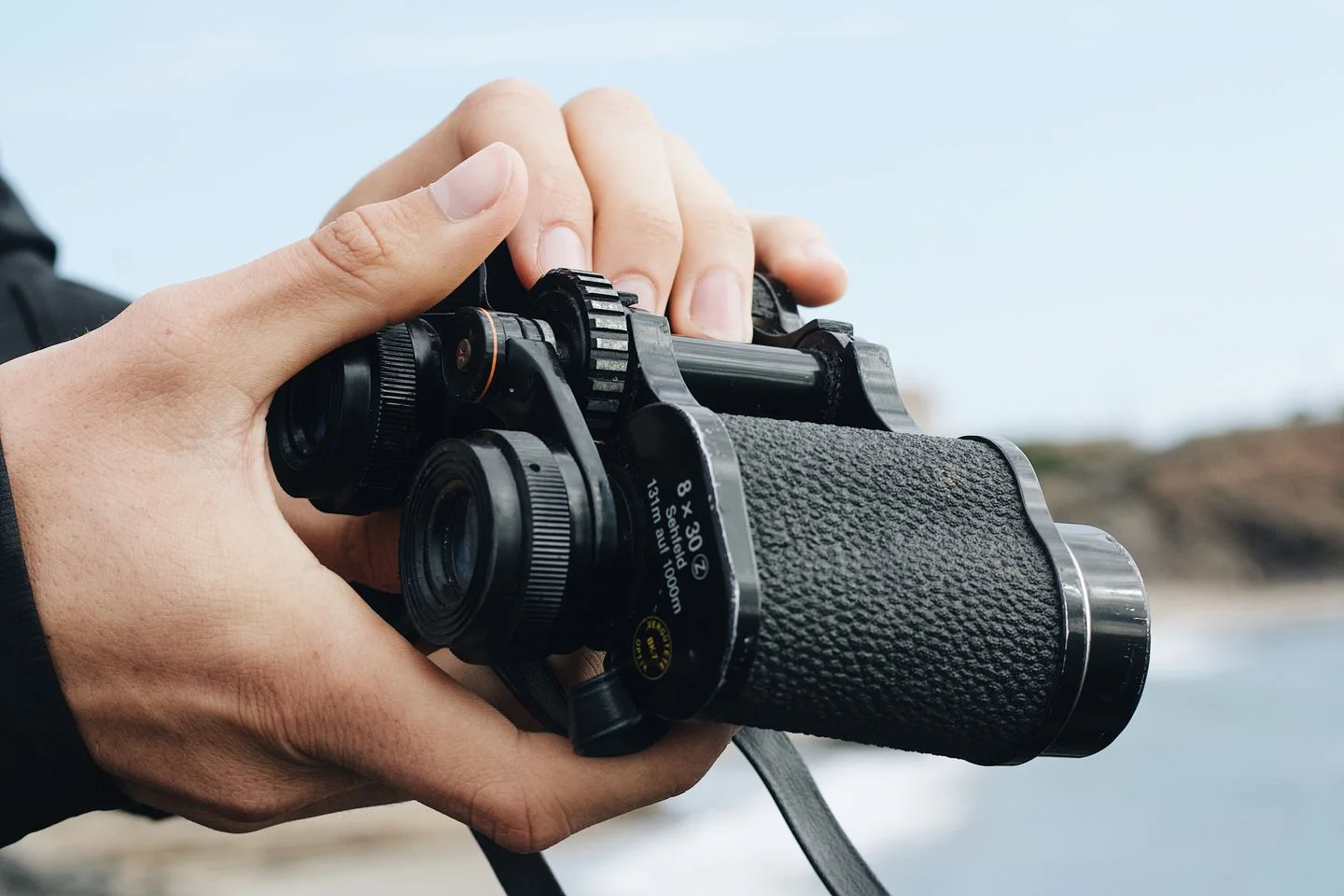
In a designation such as 8 × 32, the first number indicates magnification and the second the objective diameter in millimetres. ZEISS explains this distinction in its introduction to binocular optics. It describes two properties rather than a complete assessment. Weight, handling, and the visible field remain separate comparisons.
Higher magnification enlarges a detail but can make a handheld image appear less steady. Compare candidate magnifications yourself. What matters is which model lets you examine the desired detail comfortably without repeatedly losing it. A theoretically larger image offers little benefit if it makes observation harder.
The second number does not define the entire device either. Compare actual outer dimensions and stated weight. Two binoculars with similar numerical designations can feel different to carry and hold. Include the case and intended strap when considering the space occupied in your luggage.
Do not infer field of view from those two numbers
Field of view describes the width visible at a stated distance. ZEISS notes that it cannot be calculated solely from a designation such as 10 × 42; you need the separate specification. This matters particularly when you want a connected landscape view rather than one fixed detail.
Compare figures using the same reference distance and consider them alongside magnification. A broader overview may help you find a subject. Your experience while looking through the device matters too. Check whether you can see the intended frame without awkward head movements.
When comparing in a shop, use the same distant object. Alternate between devices instead of assessing each on a different subject. This is not a laboratory test of your own. You are simply checking how readily you can look and relocate the subject with each candidate.
Try spacing, glasses, and focusing
Read the adjustment instructions for the exact model. The spacing between the two barrels, the eyecups, and any dioptre adjustment serve different purposes. An unsuitable initial setup can distort your first impression. Ask for a demonstration if the sequence is unclear.
If you wear glasses, try the binoculars with them and use the intended eyecup setting. Judge the field you actually see and the handling you find comfortable. A general suitability statement cannot replace this individual fitting.
Use the focus wheel with both hands in the normal holding position. Can you reach it without changing your grip? Is the desired focus easy to locate? With shared binoculars especially, the second person should be able to restore their setting without rereading the entire manual each time.
Weigh one shared pair against two devices
One shared pair removes a duplicate object but places the carrying responsibility with one person. It also means you cannot view a brief event simultaneously. When passing it over, stop in a suitable position and describe the subject clearly rather than attempting the handover while walking.
Two devices permit simultaneous watching but make sense only if both people want to use them. For an occasional shared pause, one well-adjusted pair may suffice. During longer observation, different individual preferences may matter more than owning matching equipment.
Finally, check storage and lens-care instructions before purchasing. If the caps, case, or strap would constantly obstruct your routine, take those details as seriously as the optical figures. An occasionally used pair particularly benefits from easy access and an understandable care method afterwards.
Sources & current information
Opening hours, connections and conditions can change. Consult official sources before travelling and follow local notices.