Assign functions first
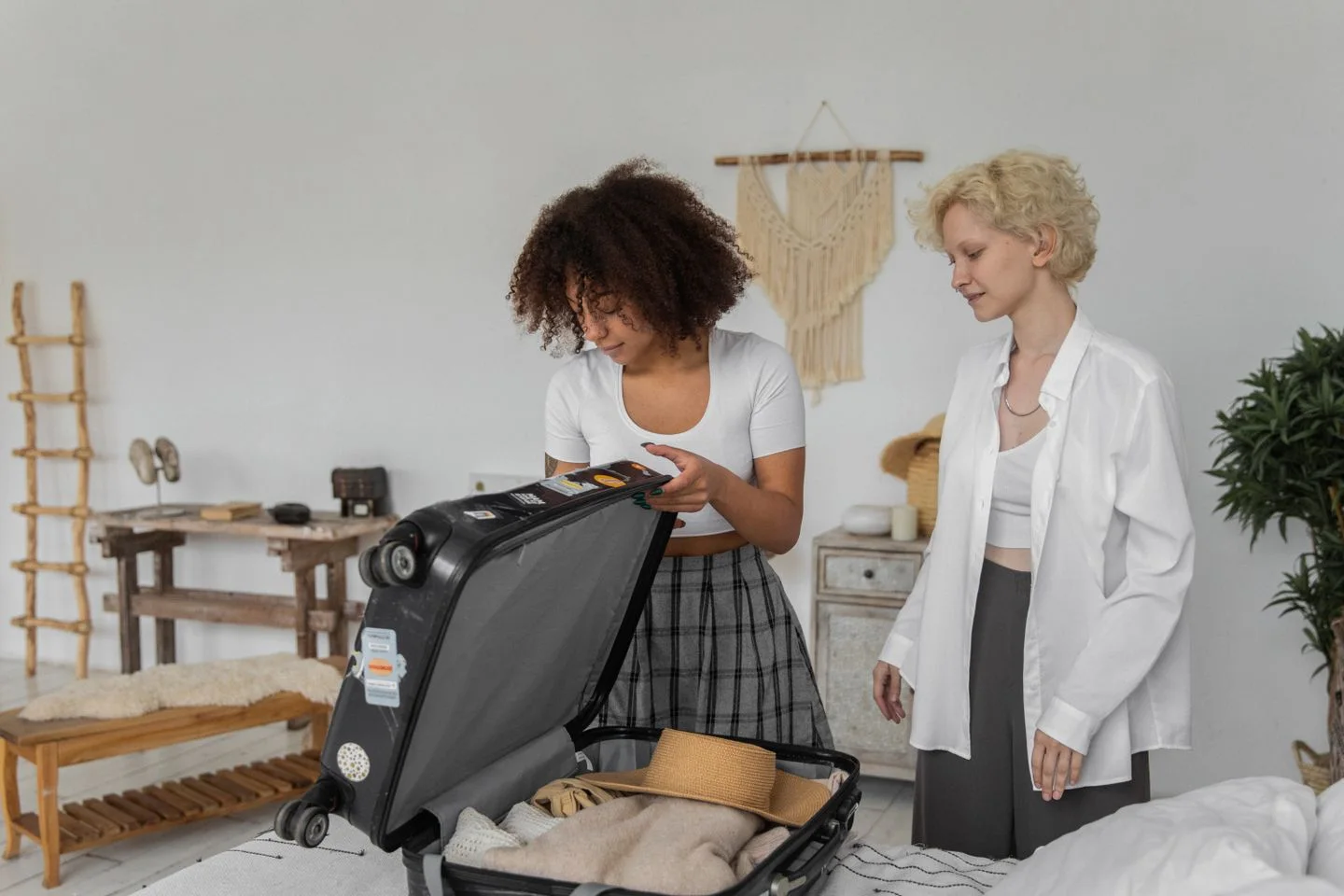
Before packing, put the shared items together: perhaps a picnic blanket, suitable charger, camera or guidebook. Decide what each object is for and who will actually put it in a bag. Saying “we are bringing a blanket” does not assign responsibility. A name beside the item prevents both people, or neither, from assuming it is covered.
Separate ownership from the carrying task. The camera’s owner need not automatically carry all the shared food, and the person with the larger backpack need not fill it with everything for two. A simple shared list can contain three columns: item, responsible person and bag. That final column also helps you find things later.
Keep personal essentials accessible
Tickets, identification, necessary personal medication and payment methods should not disappear into one communal pouch without thought. Each person needs access to their own essentials even during a short separation. A second pair of gloves also serves a different purpose from a duplicate charger: both travellers may need warm hands at the same time.
Check supposedly shareable electronics in actual use. Can the power adapter serve both devices, are the necessary cables present, and can charging fit the available time? One port may work when you charge sequentially. It is less convenient when both nearly empty phones are needed for the next stage that evening.
If a ticket exists on only one device, establish the operator’s required proof and stay together when boarding as necessary. A screenshot is not automatically a valid substitute for every digital ticket. Sharing equipment should not create an unexplained dependency at inspection.
Work through a sample division
Imagine a day involving a train, city walk and picnic. Traveller A carries the shared blanket and food box; traveller B takes the camera and compatible charger. Each keeps water, clothing, phone and personal documents accessible. This is an example to test, not a prescribed weight distribution.
Now rehearse the actions: remove a jacket, open the food box and find a ticket. If each task requires completely unpacking the other bag, change the order or division. The number of bags tells you little about how smoothly these movements will work while travelling.
Consider the end of the day as well. An empty food box still occupies space, while a damp blanket should not be pushed directly between paper documents. Allow for separation inside the luggage rather than judging only its freshly packed state. Any purchases you actually intend to make also need room.
Test carrying and handovers
Deuter’s packing advice connects load position with the kind of trip being undertaken. For a shared arrangement, the useful consequence is to try the completed bags on your bodies rather than merely divide objects on a table. Heavy belongings should not swing loosely outside or pull the pack markedly backwards.
Walk a little with the intended load, sit down and check access to frequently used objects. If you intend to alternate carrying a backpack, both people must be able to adjust it suitably. A theoretically equal split of carrying time is of little value when the pack only fits one person reasonably.
Finish with a brief joint check. Each person confirms the items they accepted responsibility for. After that, consider the list settled unless the itinerary changes. A checked handover replaces repeated questions about whether the other person has probably remembered everything.
Keep the arrangement easy to revise after the outing. If the blanket was used once but the charger was needed throughout, access priorities may change next time. Record that observation against the particular trip rather than turning a single experience into a rule for every holiday.
Sources & current information
Opening hours, connections and conditions can change. Consult official sources before travelling and follow local notices.