Break the day down by surface
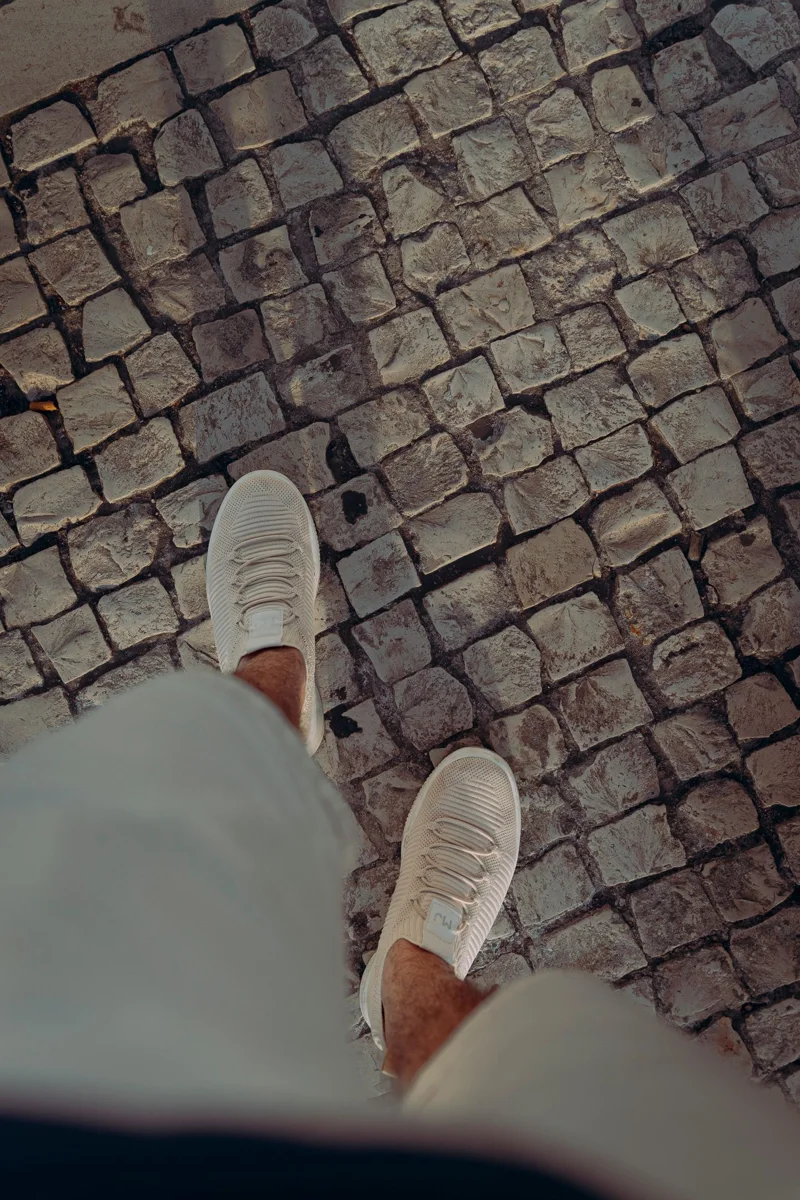
A city walk rarely consists entirely of even asphalt. Between the station and your final stop, you may encounter cobbles, a paved riverside promenade, a park path, and several museum rooms. Identify the longest continuous sections. A day spent mainly on constructed surfaces poses a different footwear question from one with an extended uneven country path.
Standing is part of the itinerary too. A guided visit, queue, and time looking at exhibits interrupt walking without giving you a chance to remove your shoes. Consider more than how athletic the longest walk appears. The relevant pair is the one that feels suitable throughout the sequence and moves comfortably in your ordinary way.
Footwear should match the outing; conspicuous tread cannot replace checking current path conditions. Change the plan where conditions or closures make a section unsuitable. Different shoes do not automatically make that section appropriate.
Compare with the socks you intend to wear
Bring your intended socks and try both shoes. LOWA's fitting advice explicitly recommends the socks planned for the activity and comparing different models. This simple preparation is more revealing than assuming a familiar size number means the same internal shape with every brand.
Start by standing still and noticing the heel, toe area, and space over the top of the foot. Lace the shoes as you expect to wear them, rather than trying to correct excess space through extremely tight lacing. If you use your own familiar inserts, establish their suitability and include them when fitting.
Feeling acceptable while seated is not enough. Walk a reasonable distance in the shop and use any designated fitting surfaces. Notice repeated slipping or clear pressure. These observations justify trying another shape; they are not instructions to force your feet to adapt to an unsuitable shoe.
Assess flexibility and construction together
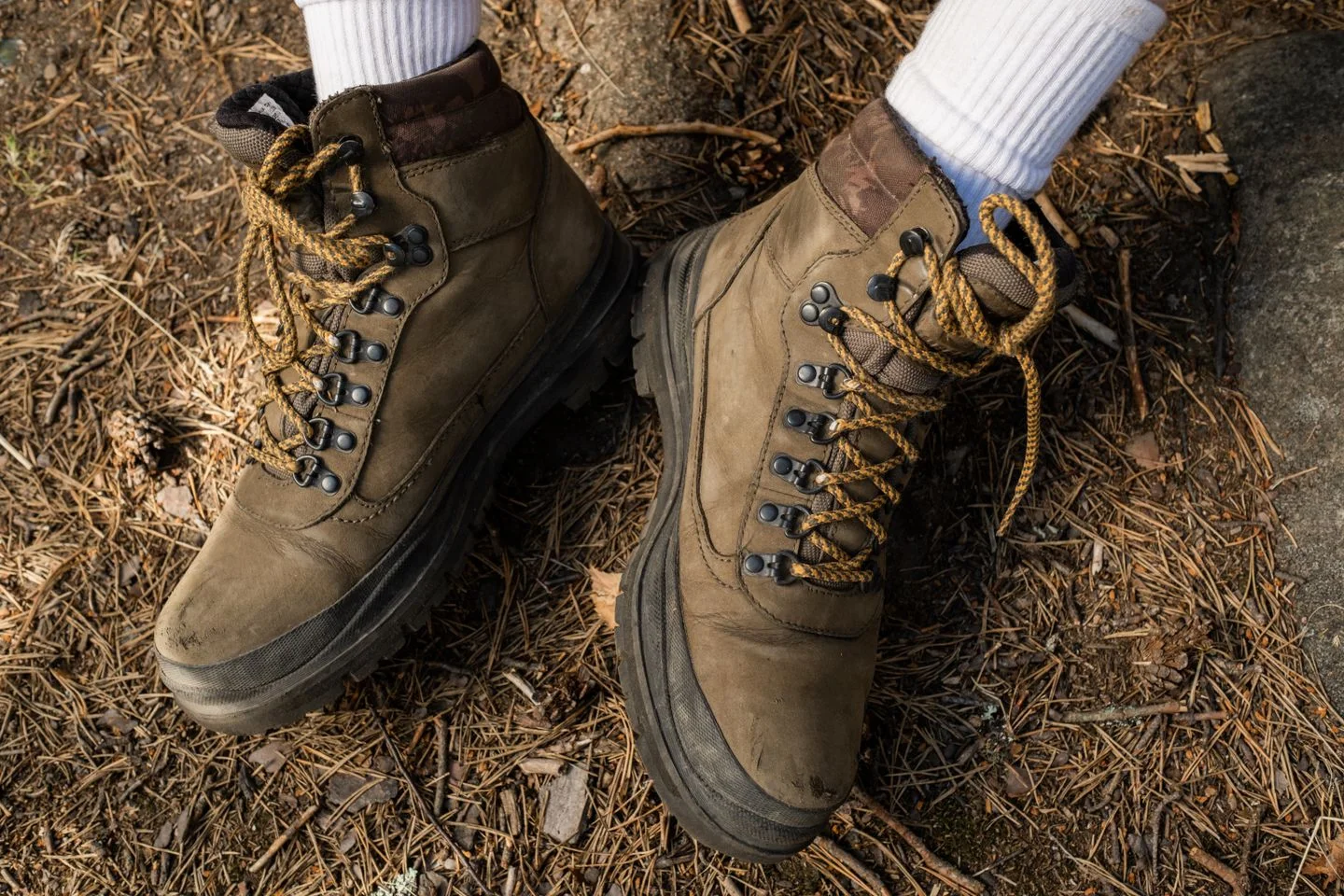
A particularly stiff construction can feel different while walking long paved stretches from a more flexible shoe. A soft upper may feel pleasant without giving the same hold you are accustomed to in another construction. Rather than inferring the whole experience from a material name, assess the complete pair on your feet.
Examine the outsole and its contact surfaces too. Deep lugs are visible, but they are not a general guarantee of grip on wet stone or polished indoor floors. Manufacturer claims concern particular constructions and tests. No tread pattern removes the need to pay attention on smooth surfaces and account for the conditions.
Make your weather requirement specific
Think about the moisture you normally expect during this kind of day. A brief link in drizzle is different from several hours in wet grass. Read the statement for the exact shoe instead of inferring waterproofness from leather, fabric, or a high collar. The upper, lining, and construction may all contribute to the product's description.
A more weather-oriented model may feel different indoors from your existing lightweight pair. If the itinerary includes many warm indoor stops, include those in the comparison. No single construction provides the ideal answer to every combination of temperature, moisture, and use.
A shared outing does not require matching footwear
Two people may find different shoe shapes comfortable on the same route. Choose around each person's feet and experience of walking in the pair. Matching appearances are not a shared equipment objective. If one person wants to try unfamiliar footwear, the first long city day should not be its only introduction.
LOWA suggests beginning with shorter walks in new hiking footwear. For a city outing, the useful application is to become familiar with a new pair on a manageable suitable walk before depending on it for a crowded sightseeing day. Check the seller's actual return conditions: indoor fitting and a worn outdoor outing are different activities.
Include your existing shoes in the comparison
A pair you already wear comfortably may be the most useful reference. Check its condition, soles, and fastening, and compare it with the proposed day. A purchase is not required merely because the destination contains cobbled streets.
If you need another pair, identify the specific reason: more suitable space at the front, easier lacing, construction appropriate to the intended use, or clear weather-related specifications. These observations narrow the choice. A general promise of the perfect city shoe does not.
Sources & current information
Opening hours, connections and conditions can change. Consult official sources before travelling and follow local notices.